
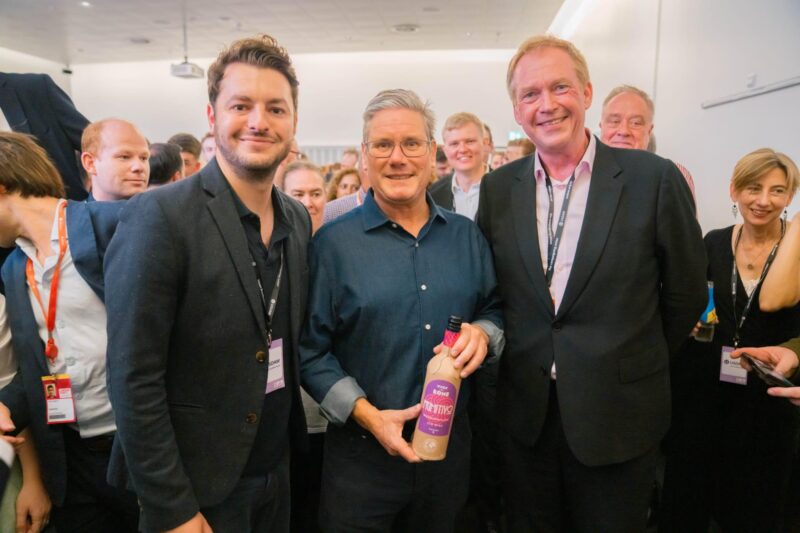
Over the past week, I have been in Liverpool for the Labour Party’s annual conference. As a candidate, it was a very busy time, full of meetings, panel events and media appearances, as well as taking in speeches from Labour’s shadow cabinet, but it was fantastic to be able to catch up with many friends too.
Party conferences are a place for the wider political family to come together, to discuss, test and challenge ideas and policies, and to find out more about the organisations who put on events or take a place in the exhibition centre.
Yet, while party conferences are an opportunity for like minded people to meet, they are also a shop window for the rest of the country. These were likely to be the last set of conferences until next year’s General Election – whenever that may come – and many people across the country will have been listening closely to what each party had to say.
I believe that the litmus test for any political party during a conference is whether they choose to speak to the country, not just the party faithful in the room. Over this period, the contrast between the two major parties was stark. While the Conservatives turned inwards for a chaotic, knee-jerk and, frankly, odd few days, Labour were focused, united and offered a vision of what Britain’s future could look like.
However, this year’s Labour Party conference also took place under a cloud as the devastating tragedy in Israel unfolded. As David Lammy, Labour’s shadow foreign secretary said, it may never have felt more distant, but we will not surrender the hope of two states living side by side in peace.
It was against this backdrop that Keir Starmer addressed the nation on Tuesday. I thought it showed the measure of the man in how calmly – and with no little courage – he handled the incident with the protestor. He, quite literally, dusted himself down, rolled up his sleeves, and delivered a speech for the ages.
Keir set out a plan for a decade of national renewal, far removed from the Conservative sticking plasters which have driven our country to the brink. He presented a future built on economic growth, safer streets, cheaper homegrown British power, better opportunities for young people, and a rejuvenated NHS.
From a local perspective, there were significant policy announcements: the delivery of the biggest boost to affordable housing for a generation. Putting an end to ‘dental deserts’ – like in Suffolk – by funding NHS dentists to offer thousands more urgent appointments and incentivising dentists to work in the most in-need areas. Revamping the apprenticeship levy to fund specialist training colleges that equip workers for local industries. Funding to clear the NHS backlog.
I know it will be hard to turn our country around. After 13 years of the Conservatives in power it feels like nothing works, and that there is less money in all of our pockets. The job before us is immense. As Keir said, days out, meals out and holidays are the first things people have had to cut back on, but now, even the little things, like picking up a treat in the supermarket, is a luxury too few can afford. We want people to have more time, more energy, more possibility, more life.
Labour’s job in 1997 was to rebuild a crumbling public realm. In 1964, it was to modernise an economy left behind by the pace of technology. In 1945, a new Britain had to be built out of the trauma of collective sacrifice.
In 2024, we will have to do all three.
It is time to get Britain’s future back.